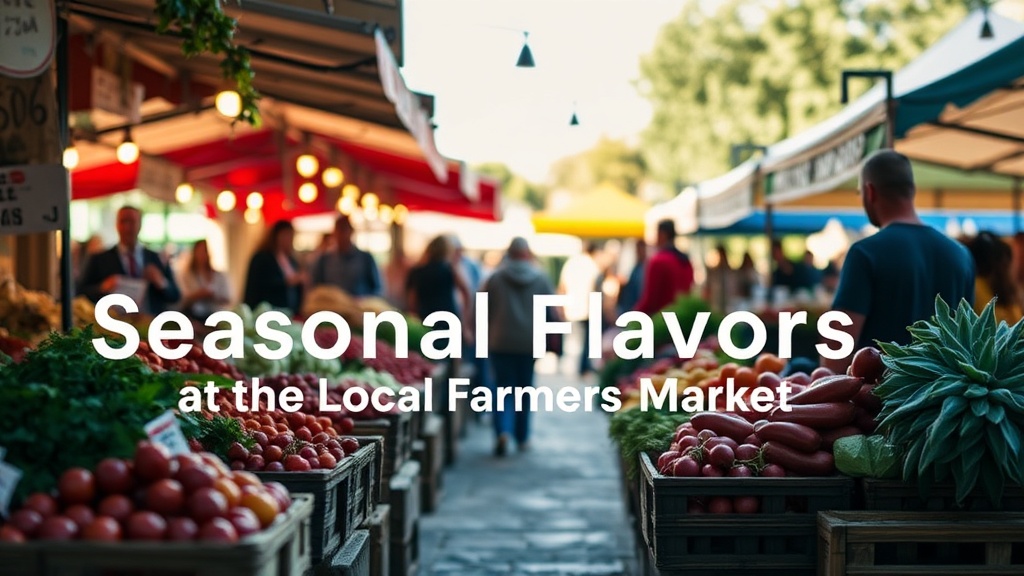
Seasonal Flavors at the Local Farmers Market

This post details the current seasonal produce available at the local farmers' markets in the Montérégie region and how to shop effectively for Quebec-grown goods. You'll find specific advice on what to look for during this transition, how to identify peak ripeness in local crops, and which regional specialties are worth your money right now.
What is in season in Quebec right now?
The current seasonal rotation focuses on hardy root vegetables, brassicas, and late-season orchard fruits. As we move through the autumn months in the Montérégie region, the heavy hitters are pumpkins, squash, and various types of apples from local orchards.
If you visit a market in La Prairie or nearby Saint-Constant this week, you'll notice the shift from summer berries to much heartier produce. It's a different kind of shopping experience. You aren't looking for fragile strawberries anymore; you're looking for the weight and density of a good butternut squash.
The heavy hitters for this season include:
- Root Vegetables: Carrots, parsnips, and beets are at their peak sweetness due to the recent cooling of the soil.
- Squash Family: Butternut, delicata, and even those giant pumpkins that look great on a porch.
- Orchard Fruits: Gala, Honeycrisp, and McIntosh apples are everywhere right now.
- Greens: Kale and Swiss chard are holding up much better in the cooler air than lettuce did.
It's a great time to stock up. The flavors are deeper because the vegetables have spent more time maturing in the ground. If you want to check the official agricultural calendar to see what else is coming, the Agrinter website offers great insights into Canadian crop cycles.
How much does organic produce cost at local markets?
Prices at local farmers' markets generally vary based on the specific farm's scale and the current demand for organic versus conventional crops. While you might pay a slight premium for organic, the quality and freshness often justify the cost.
Here is a general breakdown of what you might expect to pay for staple items at a typical Montérégie market right now:
| Produce Item | Typical Price (Per kg/unit) | Notes |
|---|---|---|
| Apples (Local) | $3.50 - $5.00 / kg | Price varies by variety (Honeycrisp is usually higher). |
| Butternut Squash | $2.00 - $4.00 / unit | Look for heavy, firm skin. |
| Carrots (Organic) | $3.00 - $4.50 / kg | Local Quebec carrots are incredibly sweet. |
| Kale/Greens | $4.00 - $6.00 / bunch | Often sold in bundles. |
Don't be surprised if prices fluctuate week to week. Weather patterns in Quebec can be unpredictable—one frost can change the supply of greens almost overnight. It's always worth bringing a little extra cash or checking if the vendor takes Interac, as some smaller stalls are still cash-only (though that's changing).
I've found that buying in bulk when the price drops is the smartest way to handle this. If you see a massive pile of apples at a lower rate, grab a bag. They'll last in your pantry for weeks if kept cool.
Which local brands should I look for?
You should look for established Quebec brands and labels that signify high-quality, local production. Many vendors at the market don't use big corporate names, but they often carry regional specialties that are highly respected.
When you're looking for high-end artisanal goods, keep an eye out for products that use local ingredients. For example, if you see local cider or apple-based products, you're seeing the best of our region. I often look for certain maple products or local cheeses that pair well with the seasonal produce.
If you're looking for more information on the standards of food production in Canada, the Canadian Food Inspection Agency provides the regulatory background. However, at the market, your best "brand" is the name of the farm itself. Many farmers here in the South Shore area are quite proud of their family names and will tell you exactly how they grew their crops.
One thing I've noticed is that the quality of the "unbranded" produce—the stuff just sitting in a wooden crate—is often superior to the packaged versions in big grocery stores. It's a bit of a gamble, but usually a winning one.
I often grab a coffee before heading to the market to stay alert. If the weather turns a bit chilly, I might head to one of the cozy coffee shops in La Prairie to warm up before I start my shopping. It makes the whole morning feel more like an event than a chore.
Tips for picking the best produce
Knowing how to select your food is a skill that takes a bit of practice. You can't just grab the first thing you see. You have to be a bit more discerning.
- Squash: Give it a gentle squeeze. It should be rock hard. If there is any "give" or softness, it's already starting to degrade.
- Apples: Look for a heavy feel. A heavy apple is a juicy apple. Avoid any with bruised or soft spots.
- Root Vegetables: Look for bright, vibrant colors. If a carrot looks dull or shriveled, it's lost its moisture.
- Greens: Check the stems. They should be crisp and snap easily. If they feel limp, they aren't fresh.
It's also worth noting that the most "perfect-looking" vegetable isn't always the best. Sometimes the slightly odd-shaped one has the most flavor. Nature isn't perfect, and neither is the produce.
I've learned that the best time to go is usually early. The selection is at its peak, and the most interesting vendors haven't sold out of their best stuff yet. If you wait until the last hour, you might find some great deals, but you'll also find a lot of nothing.
The atmosphere at these markets is what keeps me coming back. It isn't just about the food. It's about the community and seeing the people who actually grow what we eat. It's a much more direct connection than what you get at a supermarket.
When the weather is nice, I like to take my haul and head out. If I've picked up some fresh berries or bread, I'll head toward the waterfront gems for a quick lunch outside. It's a simple way to enjoy the fruits of the season.
Don't forget to bring your own reusable bags. Most vendors appreciate it, and it's better for the environment. Plus, it makes carrying heavy items like squash much easier on your hands.